
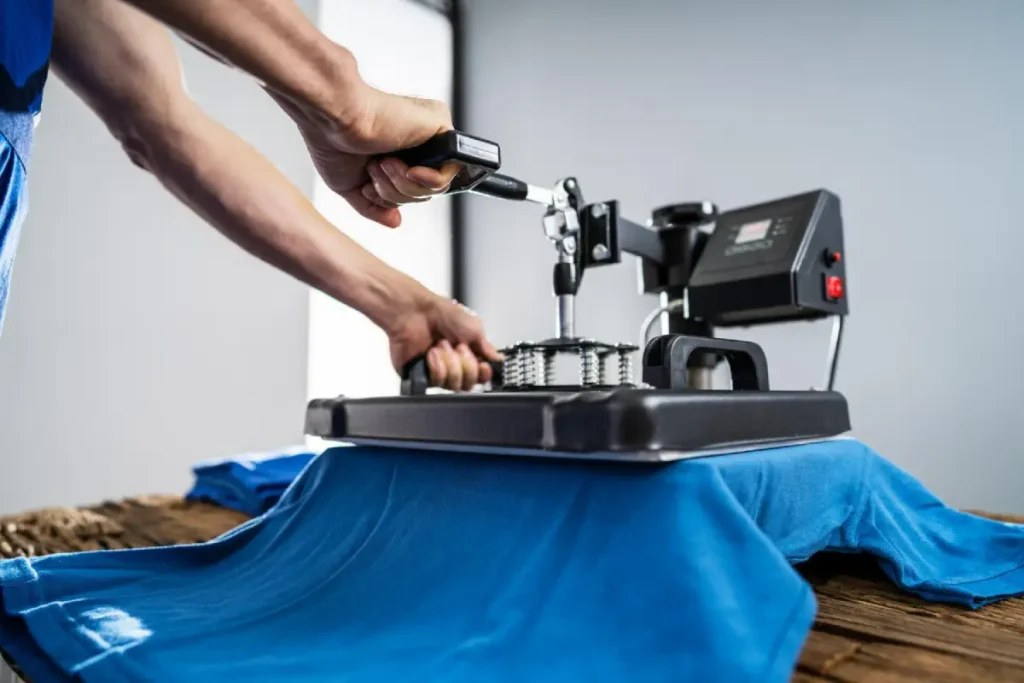
The apparel decoration industry is in the midst of a fundamental shift. For years, the barrier to entry was defined by heavy machinery and the manual labor of screen setup. Today, the dtf printing paradigm has flipped that dynamic, allowing boutique brands to match the complexity and color accuracy of industrial giants. Yet, a critical trap persists: many business owners treat the heat press as a generic tool, failing to realize that apparel manufacturing is an exercise in applied physics.
To reach a premium market tier, you must stop “printing” and start “engineering.” The difference between a retail-grade garment and a promotional throwaway lies entirely in the mechanical bond between the transfer and the textile. When you utilize dtf transfers, you are essentially deploying a high-performance polymer into the fabric weave. If that deployment isn’t calibrated, you’re not building a brand; you’re building a liability.
The Technical Pillars of Bond Integrity
Achieving a professional “soft-hand” finish is not a matter of luck—it is a matter of managing the variables. Every textile fiber has a specific thermal threshold and weave density. Your job is to align your production parameters to match these. To move into an elite tier of production, consider these three pillars:
- Moisture Displacement: Textile fibers naturally hold ambient moisture. A 10-second “pre-press” isn’t optional; it is essential to evacuate the steam that would otherwise act as a barrier between your print and the garment.
- PSI Calibration: Pressure is the silent driver of adhesion. Using a press with a digital pressure sensor allows you to standardize your application, ensuring every print receives the exact force needed for deep fiber penetration.
- Structural Stabilization: The cooling cycle is when the adhesive “locks” into the fiber structure. Peeling while hot bypasses this stabilization phase, leading to microscopic bonding issues that only show up after the first wash.
Operational Agility: The Regional Partnership Model
If your production workflow relies on week-long shipping times, your brand is effectively paralyzed. Searching for dtf transfers near me is the most efficient way to secure your supply chain. When you partner with a high-performance regional print house, you aren’t just sourcing parts; you are securing an external R&D arm. This proximity allows for rapid prototyping, letting you test new film finishes—such as matte-poly or stretch-fit additives—with almost zero lead time.
This “Lean Manufacturing” model protects your working capital. Rather than tying up thousands in pre-printed inventory, you operate on a demand-based schedule. You can pivot your design catalog based on weekly sales data, keeping your offerings fresh and minimizing the risk of unsold stock. Harwin encourages this strategic alignment, as it allows your business to remain lean, fast, and highly profitable.
Institutionalizing Your Quality Assurance
Scalability is physically impossible if your quality is based on “operator intuition.” To transition from a workshop to a manufacturer, you must codify your knowledge into a Technical Production Ledger. This document serves as the “Source of Truth” for your team, detailing the exact thermal profiles, pressure requirements, and cooling times for every product in your catalog.
Furthermore, adopt an aggressive audit culture. Every production run should include a “Destructive Stress Test”—taking a sample and subjecting it to industrial-grade, high-heat laundry cycles. When you have the empirical data to prove your durability, you earn the right to charge premium prices. In the premium apparel market, confidence is a currency, and wash-test data is the foundation of that confidence.
Frequently Asked Questions
Why does “pre-pressing” garments change my results?
Pre-pressing is a moisture-evacuation technique. Residual humidity in the fabric turns into steam instantly upon contact with a 300°F heat press. This steam creates a physical gap between the adhesive and the fibers, preventing the molecular bond required for a long-lasting print.
How do I differentiate a premium transfer from a generic one?
Look for elasticity. A high-grade transfer will stretch and recover along with the garment without developing “white webbing” or surface cracks. If a print looks brittle when the fabric is pulled, it suggests an improperly formulated adhesive that won’t survive the stress of daily wear.
Is this process safe for high-end synthetic sportswear?
Yes, but it requires a specialized approach. Synthetics are heat-sensitive. Always use lower-temperature adhesive powders and conduct a “thermal gradient test” to find the lowest possible heat setting that achieves a bond without damaging the integrity of the synthetic fibers.
What is the most effective way to audit my production output?
The “Stress-to-Failure” protocol. Select one garment from every production batch and run it through a heavy-duty laundry cycle with high-heat drying. If the graphic shows zero degradation after five cycles, your production process is calibrated for premium retail distribution.
Building a successful, high-quality apparel brand is a journey of continuous technical refinement. By mastering the potential of dtf, you position your brand to compete at the highest level of the custom merchandise market. Harwin is committed to providing the industry insights you need to turn your production floor into a professional, profitable enterprise. Start optimizing your workflow today—your commitment to quality is the most valuable investment you can make for your brand’s future.